
Universities play a crucial role in achieving , but persistent disparities in leadership, pay and research opportunities continue to shape women鈥檚 careers in academia.
Globally, only .
In Aotearoa New Zealand, revealed striking gender imbalances in both pay and leadership appointments across all eight universities during the period between 2002 and 2017.
All universities have since worked to address the issue and now have equity frameworks. As a group of women working at five different universities, we analysed publicly available data to assess progress.
We found universities are closing the pay gap, slowly. But men are still more likely to fill senior leadership roles in the highest pay brackets.
Academic pay gap shrinking, slowly
Research published in 2020, looking at data from the early 2000s, found women at New Zealand universities .
The odds of women reaching senior (associate or full professor) ranks were . In senior roles, .
Since then, the national median pay gap across all sectors has dropped from 9.4% in favour of men in 2017 to 8.2% in 2024 and 5.2% in 2025, although the most recent drop could be largely due to the .
How do universities compare? As of February 2026, only three of eight universities (Otago, AUT, Auckland) have released recent pay gap reports. The median pay gap ranged between 9.8% and 11.9% in 2024.
However, a closer look reveals the data are skewed by differences between professional and academic staff. For academics, the gap ranged from 14.1% () to 18% () in 2024, and widened at Otago in 2025, to 20%.
Historical data are not available for most institutions, but the median academic pay gap appears to be narrowing slowly, from more than 25% in 2017 to 20% in 2025 (at the ).
Despite this improvement, men still dominate at the highest pay brackets, with three to six times more , and more men than women at associate professor or professor levels at others.
But there are visible signs of progress, including the rise in the proportion of female professors from 25% in 2019 to 34% in 2024 at one institution (Waikato).
Equity requires support
We wondered if women have become bolder and .
We often hear of women in academia being discouraged to apply for promotion. A reinforces that women are less likely to take up leadership positions after becoming mothers, internalising barriers and hence sacrificing career aspirations.
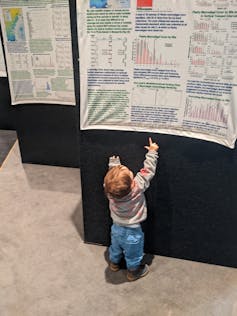
Women鈥檚 career progression is surely hindered by the relatively weak support for new parents at universities in New Zealand, which offer only six to 12 weeks of paid parental leave at full pay.
This is well below the minimum 14 weeks (recommended at least 18 weeks) of parental leave and .
In contrast, the Group of Eight universities in Australia offer at least 26 weeks of full-pay equivalent; in many cases, they also provide funding for return-to-work support schemes.
Promisingly, the scales have recently tipped in favour of women in senior leadership teams at New Zealand universities, with 56.3% of vice chancellors, deputy vice chancellors, provosts, pro vice chancellors and executive deans now being women.
However, we observed some disparities between roles, with over-representation of women in senior leadership in academic (83.3%), M膩ori (71.4%) and health (66.7%) roles, and under-representation in the top vice chancellor role (37.5%). None of the heads of science divisions are currently women.
Impact of changing funding priorities
The research funding context in New Zealand is evolving. The , with a near exclusive focus on research that has direct economic impact.
In 2024, women were principal investigators for 47.8% of projects funded by the Marsden Fund, which supports fundamental research. But this plunged to 34.2% in 2025 following government reform. We speculate this could be linked to the .
Disciplines with higher female representation 鈥� including education, anthropology, sociology and criminology 鈥� already experience lower funding success rates, for both women and men.
We are concerned the shift in government research priorities will disproportionately affect women鈥檚 opportunities for leading research in New Zealand, their chance for research career awards and their academic progression. Success in securing is a key criterion for professorial appointments, but the playing field is not level.
Diversity in leadership is critical for . Women often show , resilience, relationship building, boundary setting, flexible approaches and conflict resolution with equitable outcomes for all parties.
We welcome the positive steps universities in Aotearoa New Zealand are taking, but more needs to happen to create an equitable playing field.
, Associate Professor in Sports Biomechanics, ; , Professor in Marine Science, ; , Associate Professor in Molecular Bioscience, ; , Senior Researcher in Bioengineering, ; , Lecturer in Landscape Planning, , and , Professor of Indigenous Studies,
This article is republished from under a Creative Commons license. Read the .


